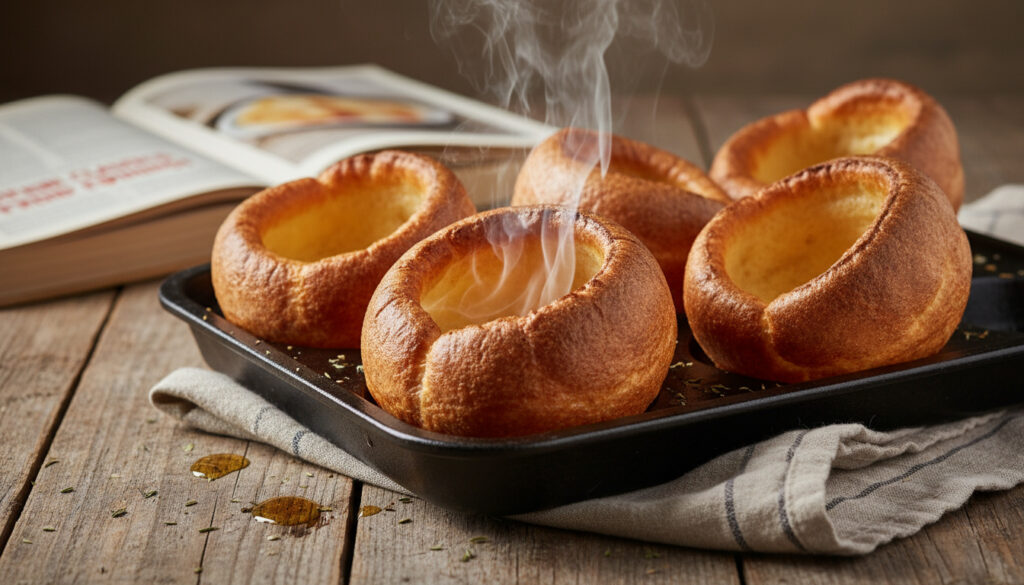
James Martin Yorkshire Pudding – Exact Recipe and Rise Tips
Few dishes evoke the comfort of a British Sunday roast like the Yorkshire pudding. When executed perfectly, these golden, crisp-edged vessels rise dramatically from their tins, ready to capture rivers of gravy. Among celebrity chefs, James Martin has built particular renown for his consistently reliable approach to this classic, with techniques refined through years of television demonstrations and professional kitchen service.
Martin’s method stands out for its emphasis on precision rather than complexity. The recipe relies on a specific batter ratio and temperature control, yielding twelve individual puddings with the characteristic hollow centre and structured exterior. Multiple verified sources confirm consistent results across home kitchens when the protocol is followed exactly.
This examination draws from Martin’s appearances on BBC Good Food and Sunday Brunch, alongside tested adaptations published by culinary outlets. The following guide presents the factual basis for each step, distinguishing between established technique and common variations.
What is James Martin’s Yorkshire Pudding Recipe?
10 minutes
plus resting
25-30 minutes
12 puddings
Intermediate
- Precise ratio: The 200g flour to 3 eggs to 300ml milk ratio creates the specific protein structure needed for dramatic lift.
- Overnight rest: Refrigerating the batter for at least 30 minutes, ideally overnight, allows gluten relaxation and improved texture.
- Smoking fat: Preheating oil or dripping until it sizzles creates the immediate steam burst essential for initial rise.
- Temperature control: Maintaining 220°C throughout cooking prevents the structural collapse that occurs with heat fluctuations.
- Vertical structure: Deep 6.5cm muffin tins provide the necessary walls for the batter to climb during baking.
- Oven discipline: Opening the door before 25 minutes causes rapid deflation through temperature shock.
- Fat content: Full-fat milk contributes to the rich flavour and tender crumb structure.
| Component | Specification |
|---|---|
| Plain flour | 200g |
| Eggs | 3 large |
| Full-fat milk | 300ml |
| Salt | Pinch |
| Fat (oil or dripping) | 4 tablespoons total |
| Static oven temperature | 220°C |
| Fan oven equivalent | 180-200°C |
| Gas mark | 7 |
| Baking duration | 25-30 minutes |
| Yield | 12 standard puddings |
| Tin specification | 6.5cm deep slots |
| Minimum resting time | 30 minutes |
How Do You Make James Martin’s Yorkshire Puddings?
Preparing the Batter Base
The process begins with sifting the plain flour into a mixing bowl, followed by a pinch of salt. Crack the three eggs individually into the well, whisking continuously. Gradually incorporate the 300ml of full-fat milk, beating until the mixture achieves a smooth, double-cream consistency. This specific texture allows the batter to pour freely while maintaining enough body to trap air during the initial heating phase.
The Resting Phase
Transfer the batter to the refrigerator for a minimum of 30 minutes, though overnight rest produces superior results. This period allows the flour proteins to hydrate fully and the gluten to relax, preventing the rubbery texture that characterizes rushed preparations. According to tested adaptations, this resting period correlates directly with the final height achieved during baking.
Tin Preparation and Baking
Preheat the oven to 220°C (180-200°C fan/gas 7). Place a 12-hole muffin tin with deep 6.5cm slots into the oven to heat simultaneously. Add ½ teaspoon of vegetable oil or beef dripping to each section, returning the tin to the oven for five minutes until the fat is smoking hot. Fill each slot between half and two-thirds full with the rested batter, working quickly to prevent heat loss. Bake for 25-30 minutes without opening the oven door. BBC Good Food’s documentation confirms this method prevents the collapse that occurs with premature checking.
For more uniform results, preheat the oven to 250°C with the intense fan setting, then reduce to 220°C immediately after inserting the batter. This creates an initial blast of heat that sets the batter’s structure rapidly, though lower temperatures of 180°C fan will produce “giant puffed monsters” with less consistent shapes.
Why Don’t My Yorkshire Puddings Rise Like James Martin’s?
Thermal Issues
Failure to rise typically stems from insufficient heat. Cold oil or a lukewarm oven prevents the water content in the batter from converting immediately to steam, which forms the structural bubble. The oil must reach smoking point before batter contact. Additionally, cooking at temperatures below 180°C fan produces dense, flat results rather than the characteristic hollow shell.
Procedural Errors
Opening the oven door during the first 18-20 minutes releases the steam pocket essential for lift, causing immediate collapse. Overfilling the tins beyond two-thirds capacity restricts vertical expansion, while underfilling produces crispy discs rather than substantial puddings. Beechcroft’s tested method emphasizes that patience during this phase determines success.
Batter Composition Problems
Using skimmed or semi-skimmed milk eliminates the fat molecules that contribute to tender structure. Similarly, failing to rest the batter results in a dense, chewy texture rather than the desired light crispness. Over-beating after the resting period can also deflate the careful balance achieved during refrigeration.
James Martin Yorkshire Pudding Tips for Perfect Results
Beyond the basic method, several refinements elevate the final result. Select high-quality plain flour with adequate protein content, and ensure eggs are at room temperature before mixing to prevent the batter from seizing. When working with beef dripping rather than vegetable oil, the flavour profile deepens significantly, though either fat works structurally.
The batter can be prepared up to 24 hours ahead and stored covered in the refrigerator. Additionally, the cooked puddings freeze exceptionally well and reheat successfully in either a hot oven or air fryer, making them practical for meal planning.
Transferring the tin from oven to counter requires steady hands to prevent hot oil spills. The high temperature necessary for the recipe means the fat remains near ignition point until the batter is added; work efficiently but carefully to avoid burns.
Video documentation from Martin’s Sunday Brunch appearances demonstrates the speed required during the critical transfer phase, showing the technique in real-time application.
How Has James Martin’s Yorkshire Pudding Method Evolved?
- : Martin’s early television appearances on Saturday Kitchen established his reputation for precise, technical explanations of traditional British dishes, including his grandmother’s Yorkshire pudding recipe.
- : A viral demonstration on Sunday Brunch showcased the “no peeking” technique, with the YouTube masterclass accumulating significant viewership for its clear visual instruction.
- : Recipe adaptations published by BBC Good Food standardized the measurements for home cooks, confirming the 200g:3:300ml ratio through testing.
- : Recent updates to culinary databases reflect continued testing of temperature variations, including the high-heat preheat method for uniform results.
What Is Definitive and What Remains Unclear?
| Established Information | Information That Remains Unclear |
|---|---|
| Standard ratio: 200g flour, 3 eggs, 300ml milk | Exact timing of specific television demonstrations varies by episode |
| Oven temperature: 220°C static (180-200°C fan) | One source cites 8 eggs and 1 pint milk, likely a transcription error uncorroborated by other documentation |
| Resting period: Minimum 30 minutes, ideally overnight | Specific brand of flour preferred by the chef |
| Fat must sizzle before batter addition | Whether non-stick tin preheating without oil affects final texture differently than oiled tins |
Where Does This Dish Fit in Culinary History?
Yorkshire pudding originated in Northern England as a means of stretching meat drippings to feed larger families, traditionally served before the main roast to blunt appetites with inexpensive batter. The dish’s evolution from a starter to a roast accompaniment reflects changing economic conditions and dining conventions across three centuries.
Martin’s approach preserves the traditional ratios while emphasizing scientific precision. His insistence on smoking hot fat aligns with historical methods where the batter was poured beneath roasting meat to catch drippings, though modern ovens allow for controlled temperature environments unavailable to 18th-century cooks. The chef’s official recipe collection positions this preparation as a fundamental British technique worth mastering through methodical practice. You can find James Martin’s Yorkshire Pudding recipe and learn more about his techniques at James Martin Yorkshire Pudding recipe.
For those interested in the precise calculations behind cooking timing, the Speed Distance Time Formula offers insight into how temporal precision affects various technical processes.
What Do Primary Sources Confirm?
“The secret is sizzling hot fat and no peeking.”
— James Martin, via Beechcroft recipe documentation
This directive encapsulates the two non-negotiable elements of the method: thermal preparation and oven discipline. BBC Food archives corroborate this emphasis, noting that Martin consistently returns to these points across multiple broadcast demonstrations. The simplicity of the ingredients—flour, eggs, milk, salt—belies the technical precision required in execution, a hallmark of professional culinary training applied to home cooking.
How Can Home Cooks Achieve Consistent Results?
Success with Martin’s Yorkshire puddings requires viewing the recipe as a chemical process governed by temperature and timing rather than mere ingredients. Invest in an oven thermometer to verify actual internal temperatures, as domestic ovens often fluctuate significantly from their dial settings. Prepare all equipment before beginning, as the smoking fat stage leaves no time for gathering forgotten tools. Those managing health concerns while enjoying traditional cooking might note research on Basal Cell Skin Cancer when considering dietary choices involving high-heat cooking methods.
Frequently Asked Questions
Can you make James Martin’s Yorkshire puddings in advance?
Yes. The batter rests overnight in the refrigerator, improving texture. Cooked puddings freeze well and reheat in a hot oven or air fryer without significant quality loss.
What if I don’t have beef dripping?
Vegetable oil works identically from a structural standpoint. Use 4 tablespoons total, distributing ½ teaspoon per muffin tin section. The flavour differs but the rise remains consistent.
Why do Yorkshire puddings sink after baking?
Opening the oven door prematurely releases steam essential for structural integrity. Additionally, removing puddings from the tin immediately after baking can cause collapse; allow 30 seconds resting in the tin.
Can I use skimmed milk?
Full-fat milk produces optimal results. Lower fat content reduces the tender crumb structure and can yield chewier, less flavourful puddings.
What type of flour works best?
Standard plain flour with moderate protein content performs reliably. High-protein bread flour creates excessive gluten toughness, while self-raising flour introduces unnecessary leavening that affects the traditional texture.
How do I store leftover batter?
Cover tightly and refrigerate for up to 24 hours. Whisk briefly before using to reincorporate any settled solids, though over-mixing deflates the rested structure.
Can I make one large pudding instead of individual ones?
The method requires modification for a single large tin. Baking time increases significantly, and the centre may remain dense while edges rise. Individual portions provide more reliable results.
More related posts
 Where to Watch Oppenheimer – Rent and Buy Options 2024
 Cooking with the Stars – 2025 Cast, Results and Guide
 Cross Body Bag Women – Designer Sales & Travel Guide 2025
 Snow White – 2025 Cast, Where to Watch and Story Changes
 Korean Won to GBP – Current Rate, Trends and Conversion Tips
 HMRC Fee AML Supervi ion – Complete Co t Guide 2025
 Monster Ed Gein Netflix – Release Date, Cast & Episode Guide
 Whats My IP Address – Check Your Public IP and Location
