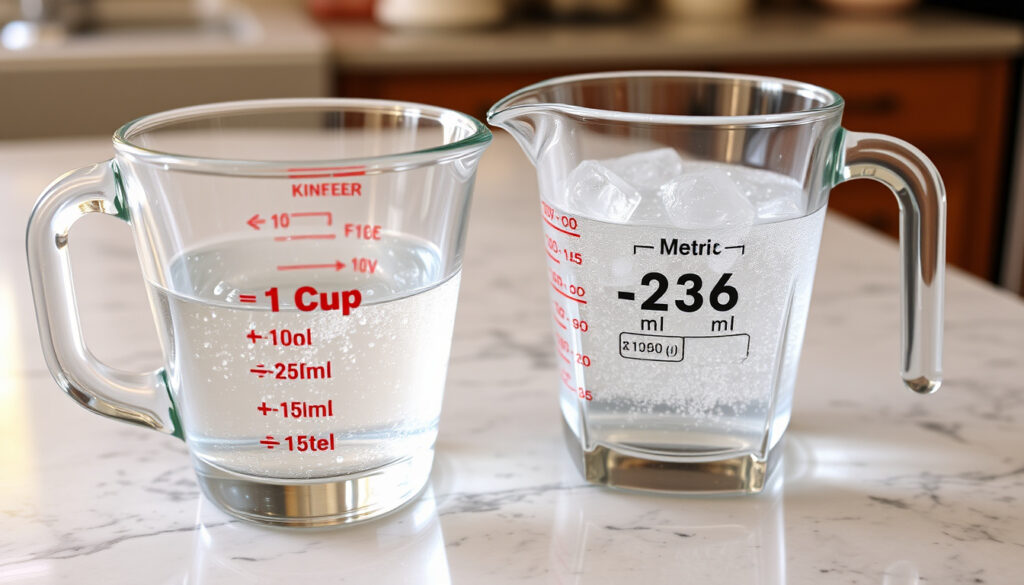
1 Cup to mL – US and Metric Conversion Charts
1 Cup to mL: The Complete Conversion Guide
Converting between cups and milliliters is a daily necessity for anyone following recipes from different regions. In the United States, one cup equals 240 milliliters, a standard established for cooking and baking applications. Understanding this conversion helps home cooks achieve consistent results when working with international recipes or switching between measurement systems.
The distinction between US customary cups and metric cups matters significantly in the kitchen. While US recipes typically use the 240 ml standard, other countries may define a cup differently, sometimes reaching 250 ml. This article provides a comprehensive breakdown of cup-to-milliliter conversions, along with essential gram equivalents for common baking ingredients.
1 Cup to mL: The Complete Conversion Guide
One US cup converts to exactly 240 milliliters according to the legal US standard for food labeling and recipe measurements. This conversion applies uniformly to all liquid ingredients since volume measurements remain constant regardless of what fills the cup. Whether measuring water, milk, or oil, the milliliter value stays the same.
The following overview grid displays the most frequently used fractional cup measurements and their milliliter equivalents at a glance.
| Cup Fraction | US Cup (ml) | Metric Cup (ml) | Notes |
|---|---|---|---|
| 1 cup | 240 | 250 | Standard US measurement |
| 1/2 cup | 120 | 125 | Commonly used in baking |
| 1/4 cup | 60 | 62.5 | Also called a quarter cup |
| 1 1/2 cup | 360 | 375 | For larger batches |
Key Insights About Cup Measurements
- The US legal cup standard equals 236.588 ml precisely, commonly rounded to 240 ml for recipe use
- Metric cups used in Canada, Australia, and other Commonwealth countries measure 250 ml each
- Volume conversion remains fixed regardless of ingredient type or density
- UK cups sometimes measure 250 ml, creating a 10 ml difference from US standards
- For most cooking applications, this 10 ml variation rarely affects final results
- When precision matters significantly, weigh ingredients on a kitchen scale instead
- The distinction between “spooned and leveled” versus “scooped” measurements affects dry goods most
Using exact conversions becomes more critical when scaling recipes up or down. A small percentage error compounds with larger quantities, potentially affecting texture and consistency in baked goods.
Volume Conversion Table for Common Fractions
| Measurement | Milliliters (US) | Milliliters (Metric) |
|---|---|---|
| 1 cup | 240 | 250 |
| 2/3 cup | 160 | 166 |
| 1/2 cup | 120 | 125 |
| 1/3 cup | 80 | 83 |
| 1/4 cup | 60 | 62.5 |
| 1/8 cup | 30 | 31 |
1/2 Cup to mL and Butter in Grams
Half a cup converts to 120 milliliters in the US system. This measurement appears frequently in recipes for sauces, dressings, and smaller batches of batter. When halving any recipe, knowing that 1/2 cup equals 120 ml helps maintain proper proportions.
Butter Conversion from Cups to Grams
Butter presents a unique conversion challenge because its density differs from water. One US cup of butter weighs approximately 226 to 227 grams. The following table provides precise conversions for common butter measurements.
| Butter Measurement | Grams | Tablespoons |
|---|---|---|
| 1 cup butter | 226-227 g | 16 tbsp |
| 1/2 cup butter | 113 g | 8 tbsp |
| 1/3 cup butter | 75-76 g | 5 1/3 tbsp |
| 1/4 cup butter | 56-57 g | 4 tbsp |
Most sticks of butter in the US market contain 1/2 cup (113 grams) or 1/4 cup (57 grams). Knowing these equivalents allows you to measure butter without scales by using the markings on the wrapper.
1/4 Cup to mL: Smaller Fraction Conversions
One quarter cup equals 60 milliliters in the US system. This smaller fraction often appears in recipes calling for flavor additions, spice blends, or small amounts of liquid. Quarter cup measurements are also common when dividing recipes or adjusting seasonings.
The eighth cup measurement, frequently needed when halving quarter cup portions, equals 30 milliliters. This conversion proves particularly useful when working with concentrated ingredients where precision matters.
US Cups to Milliliters Quick Reference
- 1 cup = 240 ml
- 1/2 cup = 120 ml
- 1/3 cup = 80 ml
- 1/4 cup = 60 ml
- 1/8 cup = 30 ml
When following recipes from different countries, verify which cup standard the original recipe uses. UK and Australian recipes may reference 250 ml cups, while US recipes typically use 240 ml. This 10 ml difference can affect delicate recipes like custards or certain baked goods.
1 Cup to Grams: Weight Conversions by Ingredient
Unlike volume measurements, converting cups to grams requires understanding ingredient density. A cup of flour weighs considerably less than a cup of sugar or butter because these ingredients have different densities. This distinction becomes especially important in baking, where chemical reactions depend on precise ratios.
All-Purpose Flour Conversions
Flour compression significantly affects weight measurements. One cup of spooned and leveled all-purpose flour weighs between 120 and 130 grams depending on the source and testing method. Sifted flour weighs less at approximately 110 grams per cup because aeration reduces density.
| Flour Measurement | Grams (Spooned and Leveled) | Grams (Sifted) |
|---|---|---|
| 1 cup | 120-130 g | 110 g |
| 1/2 cup | 60-65 g | 55 g |
| 1/3 cup | 40-44 g | 37 g |
| 1/4 cup | 30-33 g | 28 g |
Sugar and Sweetener Conversions
Granulated white sugar is denser than flour, resulting in higher gram values per cup. One cup of granulated sugar weighs 200 to 201 grams. Brown sugar is slightly denser still, weighing approximately 220 grams per packed cup.
| Sugar Type | 1 Cup (grams) | 1/2 Cup (grams) |
|---|---|---|
| Granulated white sugar | 200-201 g | 100 g |
| Brown sugar (packed) | 220 g | 110 g |
| Powdered sugar (sifted) | 120 g | 60 g |
Liquids: Water and Milk Weight Equivalents
Water and milk have a density very close to 1 gram per milliliter, meaning their weight in grams nearly equals their volume in milliliters. One cup of water or milk weighs approximately 240 grams, matching the 240 ml volume measurement perfectly.
- 1 cup water = 240 g/ml
- 1/2 cup water = 120 g/ml
- 1/3 cup water = 80 g/ml
- 1/4 cup water = 60 g/ml
For baking precision, weighing ingredients on a kitchen scale produces more consistent results than relying on volume measurements. Humidity, packing method, and ingredient brand can cause significant weight variations even within the same recipe.
Historical Context: How Cup Standards Evolved
The US customary cup measurement was formally defined in 1893 as approximately 236.59 ml as part of the Mendenhall Order, which established basic units for US weights and measures. This definition was later refined for food labeling purposes to 240 ml, the figure most commonly used in cooking contexts today.
Metric cup standards emerged separately, with countries like Canada, Australia, and New Zealand adopting the 250 ml metric cup. The international metric system, managed by the International Bureau of Weights and Measures, standardized volume measurements across most of the world during the mid-twentieth century.
The adoption of metric measurements in cooking became more widespread during the 1970s and beyond as countries transitioned away from imperial systems. Despite globalization, regional cup standards persist, making conversion knowledge essential for international recipe success.
Certainty and Variation in Cup Measurements
| Established Information | Regional Variations |
|---|---|
| US legal cup = 236.588 ml | US recipes typically use 240 ml |
| Metric cup = 250 ml | Used in Canada, Australia, UK sometimes |
| Volume stays constant per cup size | Dry goods vary significantly in weight |
| 1 oz = 28.35 g approximately | 1 tbsp = 15 ml universally |
When following unfamiliar recipes, check the source region to determine which cup standard applies. American recipes default to 240 ml cups, while British Commonwealth recipes may reference 250 ml metric cups. Many modern international recipes now specify both systems explicitly.
Why Understanding Cup Conversions Matters in Cooking
Accurate measurements form the foundation of successful cooking and baking. Converting between measurement systems becomes necessary when adapting family recipes, following international cookbooks, or purchasing ingredients sold in different unit formats.
Baking especially requires precision because chemical reactions between flour, leavening agents, and liquids depend on maintaining proper proportions. A misinterpretation between weight and volume measurements can result in dense bread, sunken cakes, or failed emulsions.
Understanding density variations helps explain why a cup of flour weighs 125 grams while a cup of sugar weighs 200 grams. This knowledge prevents common baking mistakes and allows experienced cooks to adjust recipes confidently.
Those looking to refine their baking technique might explore James Martin Yorkshire Pudding Recipe for practical application of precise measurements in a classic British dish.
Authoritative Sources on Measurement Standards
1 cup (US) = 236.5882365 mL according to the official unit conversion standard used in food labeling.
— Unit Converters official reference
1 cup or 8 fluid ounces equals approximately 237 ml when measured using standard US customary units in food preparation contexts.
— Exploratorium Food Measurement Guide
US cups measure 236.6 ml while metric cups measure 250 ml, highlighting the importance of identifying recipe origin when converting measurements.
— The Calculator Site Cooking Reference
Summary and Practical Application
Converting between cups and milliliters requires knowing which cup standard applies. US recipes typically use 240 ml per cup, while metric countries use 250 ml. For most cooking purposes, these 10 ml differences remain negligible, but precision-sensitive recipes may require verification.
Volume conversions remain consistent across all ingredients, with one cup always equaling 240 ml for US measurements. Weight conversions vary significantly based on ingredient density, making flour (120-130 g/cup) considerably lighter than sugar (200-201 g/cup) or butter (226-227 g/cup).
Professional bakers recommend using kitchen scales for the most accurate results, as volume measurements can vary with humidity, packing method, and ingredient brand. However, understanding cup-to-ml conversions provides sufficient accuracy for everyday cooking needs.
1 cup to ml syrup
One cup of syrup equals 240 ml, the same as any liquid ingredient. Syrup has a density slightly higher than water, but this difference falls within acceptable tolerance for most recipes and does not require separate conversion calculations.
1 1/2 cup to ml
One and one half cups equals 360 ml using the US cup standard of 240 ml per cup. This calculation simply multiplies 240 by 1.5 to reach the total volume measurement.
1/2 cup butter in grams
Half a cup of butter weighs 113 grams, based on the standard butter density of 226-227 grams per cup. This measurement is commonly marked on butter wrappers in the United States for convenient portioning.
1 1/2 cup to grams
Converting 1 1/2 cups to grams depends entirely on the ingredient being measured. One and a half cups of flour weighs approximately 180-195 grams, while the same volume of sugar weighs around 300 grams and butter approximately 340 grams.
1/3 cup to grams flour
One third cup of all-purpose flour weighs between 40 and 44 grams when spooned and leveled. This range accounts for minor variations between testing sources and measurement techniques.
Which cup measurement should I use?
Use the cup measurement standard specified by your recipe’s country of origin. American recipes use 240 ml per cup, while recipes from Canada, Australia, or UK may reference metric 250 ml cups. Many modern recipes state both measurements explicitly.
More related posts
 How Old Is Chris Hughes – Facebook Co-Founder’s Age and Bio
 Houses For Sale Cramlington – 2025 Prices, Listings, Best Areas
 New Boiler Cost UK – Prices Installation Grants 2025
 ICC Women’s World Cup 2025 – Schedule, Results, Venues Guide
 National Express West Midlands – Bus Timetables, Routes, Contacts & Jobs
 Take a Sexy Picture of Me Lyrics – Meaning, Analysis, and Feminist Themes
 Brianne Howey Movies and TV Shows – Complete Filmography
 Jo Malone Advent Calendar 2025 – Contents, Price and Availability
